TL;DR
Many organizations invest heavily in customer experience but overlook one of the most important customer interactions: the moment customers are asked to provide information. Whether it's onboarding, claims processing, loan applications, patient intake, or compliance documentation, customer data intake often determines how customers perceive an organization long after the initial sale.
Modern organizations are recognizing that customer data intake is not just an operational process—it is a strategic customer experience capability. By replacing fragmented forms, PDFs, emails, and manual reviews with guided digital journeys, organizations can reduce friction, improve customer satisfaction, increase operational efficiency, and strengthen long-term customer loyalty.
Organizations have never invested more in customer experience than they do today.
Marketing teams work tirelessly to create seamless digital experiences. Sales teams focus on reducing friction in the buying process. Customer success teams build programs designed to improve retention and strengthen relationships. Across industries, customer experience has become a strategic priority, recognized as a key driver of growth, loyalty, and competitive differentiation.
Yet many organizations overlook one of the most important customer interactions they manage: the moment a customer is asked to provide information.
Whether it is onboarding a new customer, filing an insurance claim, applying for a loan, submitting compliance documentation, requesting a policy change, enrolling in a healthcare program, or onboarding as a business partner, nearly every customer journey includes a point where information must move from the customer into the organization.
This process is often treated as an operational necessity rather than a customer experience initiative. As a result, organizations invest heavily in attracting and retaining customers while neglecting one of the most influential touchpoints in the customer lifecycle.
The consequences are larger than many leaders realize.

The customer experience gap nobody talks about
Most organizations evaluate customer experience through the lens of marketing, sales, and service interactions.
They measure website engagement, conversion rates, Net Promoter Scores, customer satisfaction, and retention. They redesign websites, optimize mobile experiences, and introduce self-service capabilities. These initiatives are valuable and often generate measurable improvements.
However, customer experience does not end when a prospect becomes a customer.
In many cases, the most important interactions occur after the initial purchase or application. Customers need to submit information, upload documents, complete forms, provide signatures, verify identities, or update existing records. These moments often determine how customers perceive the organization long after the marketing campaign has ended.
Unfortunately, this is where many customer experiences begin to break down.
Processes that have evolved over years or even decades frequently depend on PDFs, email exchanges, manual reviews, and disconnected systems. What appears to be a simple request from the organization's perspective may feel surprisingly complicated from the customer's point of view.
Customers are rarely thinking about workflows, compliance requirements, or internal systems. They simply want to complete a task and move on. When that process becomes difficult, the customer does not blame the process. They blame the organization.
Why customer data intake has become a strategic issue
Historically, customer data intake was viewed as an administrative function. Its purpose was straightforward: collect the information needed to move a process forward.
That perspective is becoming increasingly outdated.
Today, customer data intake sits at the intersection of customer experience, operational efficiency, compliance, and digital transformation. The quality of the intake experience influences how quickly processes move, how accurately information enters the business, how many resources are required to support customers, and ultimately how customers perceive the organization itself.
Consider a customer applying for a financial product. If information is collected through a lengthy PDF, reviewed manually, and followed by multiple requests for clarification, the customer experiences delays and uncertainty. If the same process guides the customer through a dynamic experience that validates information in real time, requests only relevant documentation, and provides visibility into next steps, the experience feels fundamentally different.
The outcome may be identical. The perception is not.
Increasingly, organizations are discovering that customer experience and operational efficiency are not separate objectives. They are closely connected. Poor intake experiences create operational complexity, while operational complexity creates poor customer experiences.
The hidden impact on customer loyalty
Many customer experience discussions focus on acquisition and retention as separate stages of the customer lifecycle. In practice, however, customers form opinions continuously.
A customer may have an excellent purchasing experience and still become frustrated during onboarding. An insurance policyholder may be satisfied for years until they need to submit a claim. A business customer may appreciate a company's products but struggle through a distributor onboarding process.
These moments matter because they often occur when customers are trying to achieve something important. They are opening an account, filing a claim, requesting service, securing financing, or fulfilling a compliance obligation. The stakes are often higher than during routine interactions.
When customers encounter unnecessary friction during these moments, trust begins to erode. The issue is rarely one major failure. More often, it is the accumulation of small frustrations: providing the same information multiple times, waiting for updates, responding to requests for missing documents, or navigating unclear processes.
Organizations often underestimate the impact of these experiences because they occur outside traditional customer experience programs. Yet they can have a profound effect on customer loyalty and future business relationships.
Why operational efficiency and customer experience are inseparable
One of the most common misconceptions in digital transformation is that customer experience initiatives and operational efficiency initiatives are separate efforts.
In reality, they are often solving the same problem from different perspectives.
Customers want processes that are fast, intuitive, and transparent. Employees want processes that are efficient, accurate, and easy to manage. Both goals become difficult to achieve when information enters the organization through fragmented workflows.
When customer data intake depends on manual reviews, email exchanges, and disconnected systems, employees spend time coordinating information rather than acting on it. Customers experience the resulting delays as poor service. What appears to be an operational issue internally becomes a customer experience issue externally.
This relationship becomes even more important as organizations scale. Increased transaction volumes create additional complexity, more exceptions, and greater demand for operational resources. Without modernizing the intake process itself, organizations often find themselves trapped in a cycle of rising operational costs and declining customer satisfaction.
The shift from collecting information to guiding journeys
Leading organizations are beginning to rethink customer data intake altogether.
Rather than viewing intake as a form or document collection process, they are treating it as the beginning of a customer journey. This shift changes the objective from simply gathering information to helping customers achieve an outcome.
When viewed through this lens, customer data intake becomes much more than a transactional activity. It becomes an opportunity to reduce friction, improve transparency, accelerate processing, and strengthen customer relationships.
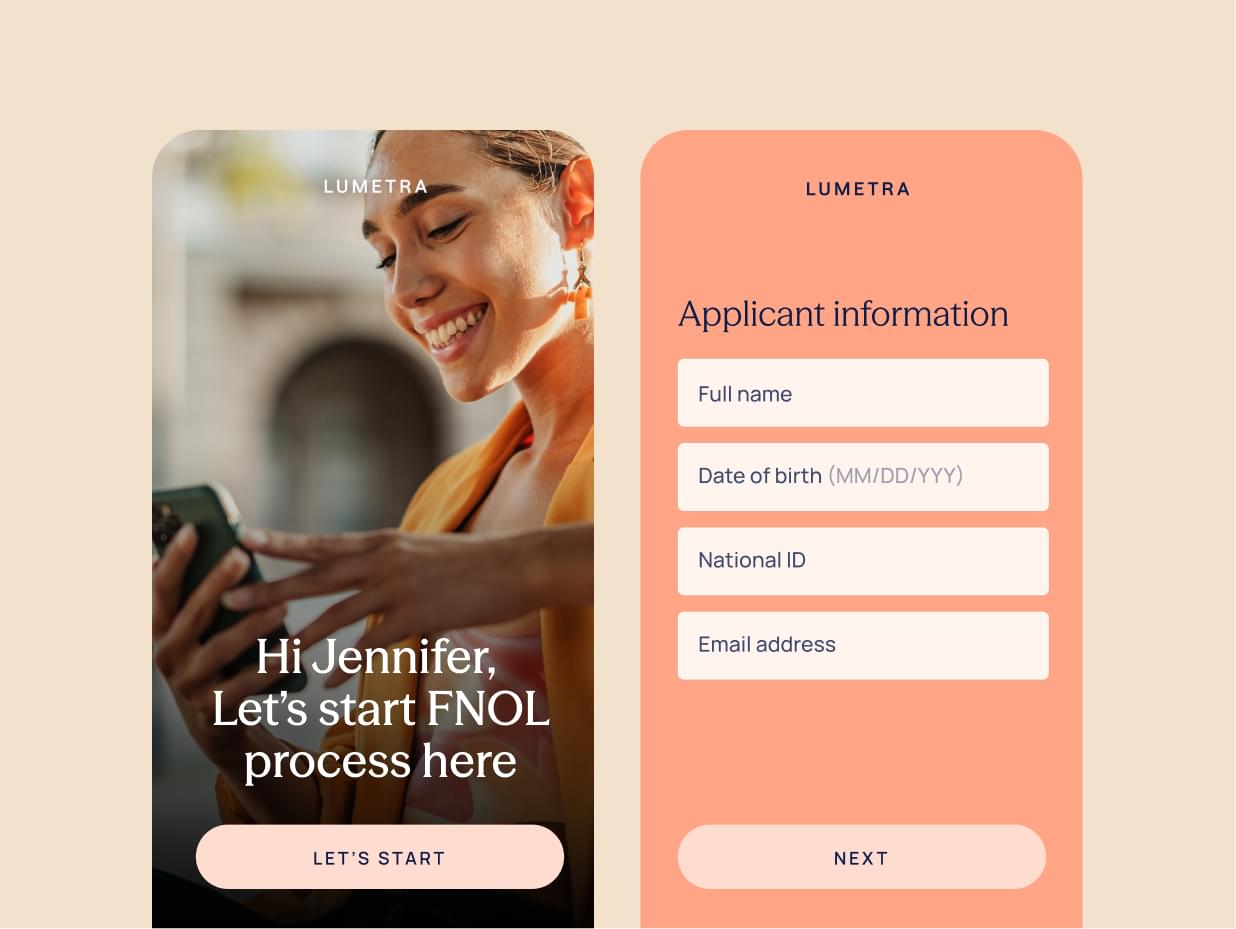
Instead of forcing customers to navigate complex requirements on their own, modern organizations guide them through the process. Information is validated in real time. Relevant documents are requested automatically. Progress is visible. Communication becomes proactive rather than reactive.
The result is not only a better customer experience. It is also a more efficient operating model that reduces manual work, improves data quality, and enables teams to focus on higher-value activities.
The future of customer experience starts with customer data intake
Organizations often think of customer experience as something that happens in marketing campaigns, sales conversations, or support interactions. Increasingly, however, competitive advantage is being shaped by the operational experiences that occur between those moments.
Every customer journey eventually reaches a point where information must be exchanged. That interaction may last minutes, days, or even weeks depending on the complexity of the process. It is often one of the most consequential experiences a customer will have with the organization.
As customer expectations continue to rise, organizations can no longer afford to treat data intake as a back-office process. It has become a strategic capability that influences customer satisfaction, operational efficiency, compliance outcomes, and long-term loyalty.
The organizations that recognize this shift will not simply collect information more efficiently. They will create customer experiences that continue delivering value long after the sale is complete.
FAQ

Forget forms. Create digital customer journeys.